Science Says Sunday – Reading and the brain

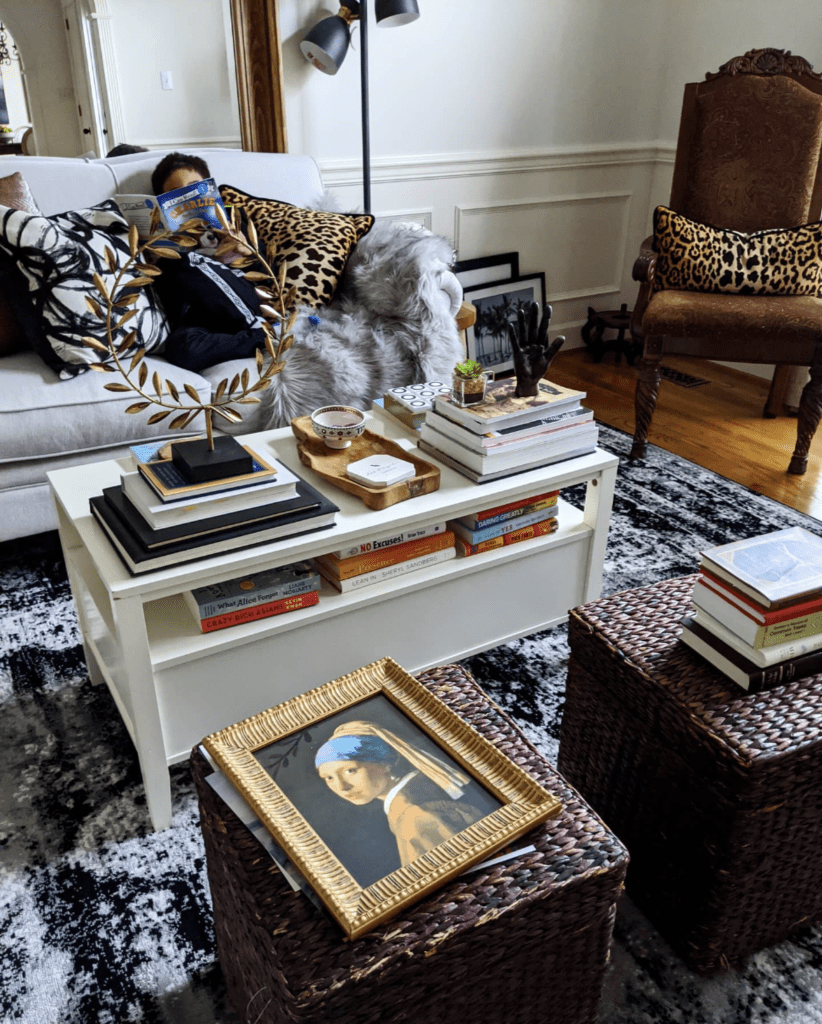
I started reading again…for fun! I forgot how amazing it feels to read a book and what it does to my vocabulary – both spoken and written – when I do. It occured to me that as many of us prepare to face an uncertain fall with school for our kids, one thing is for sure: Reading has amazing benefits for both adults and kids alike. So let’s see what the science says.

First and foremost, evidence from scientific studies suggest that there is a positive association between reading and our brain activity. Research also suggests that

  1. Sharing books together can help children’s language development and help with their reading skills.
  2. There is evidence of enhanced connectivity in the brain after reading, as evidenced by MRI.
  3. Reading involves several brain functions, eg visual and auditory processes, phonemic awareness, fluency, comprehension.
  4. Reading every day can slow down late-life cognitive decline and keeps the brains healthier.

So in light of the fact that this fall is certain to require more episodes of social and physical distancing, requiring more time with our household members, consider picking up a book! Reading to the kids is one way to help yourself and help them. Don’t have kids? Read for fun here and there, even if you don’t have the stamina to read an entire book cover to cover in a matter of days.

I will tell you that my recent read was phenomenal! Untamed was such a great book. The ideas aren’t necessary novel, but I thoroughly enjoyed Glennon Doyle’s take on so many of the struggles we each face in our daily lives.

For the kids, I picked up The Diary of a Young Girl – by Anne Frank, and the entire Harry Potter series. I plan to read these to them during “reading time” the upcoming months.

A number of IGers recommened books I should read next. Perhaps you will find a good title for yourself among these!

  1. American Dirt
  2. Women who run with wolves
  3. The Great Believers
  4. Eleanor Oliphant is Completely Fine
  5. The Beauty in Breaking
  6. Invisible Woman by Caroline Criado-Perez
  7. In the time of Butterflies
  8. Next Year in Havana
  9. Where the Crawdads Sing
  10. The Vanishing Half
  11. The Friend Zone
  12. The City We Became
  13. The Book of Unknown Americans
  14. Waris Dirie’s Life Story
  15. Defending Jacob Vox
  16. My Dark Vanessa
  17. Not Your Perfect Mexican Daughter
  18. Finding Chika
  19. The Body Keeps Score
  20. Made to Stick
  21. Separated
  22. Fair Play
  23. Furious Hours
  24. This Is the Story of a Happy Marriage
  25. Evicted
  26. Educated
  27. Reese Witherspoon’s Book Club List
  28. Oprah’s Book Club List
  29. Barack Obama’s Book List

References:

https://www.ncbi.nlm.nih.gov/pmc/articles/PMC3868356/

https://pubmed.ncbi.nlm.nih.gov/25628041/

Robert S. Wilson PhD, Patricia A. Boyle PhD, Lei Yu, PhD, et al: “Life-span Cognitive Activity, Neuropathologic Burden, and Cognitive Aging.” Neurology, Vol. 81. 2013.

Prashanthi Vemuri, PhD, Elizabeth C. Mormino, PhD: “Cognitive Stimulating Activities to Keep Dementia at Bay.” Neurology, Vol 81. 2013

Science Says Sunday – Probiotics

Instagram, like Facebook, will often remind you of the pictures you posted on your feed years ago. This one is from 2014 when I attended the See Jane Write bloggers conference organized by the one and only Javacia Harris Bowser. What a fun time in blogging that was! I was a newbie, talking all things sartorial and very much still finding my footing in academia.

2014 is when I started my faculty position, and hadn’t yet found the confidence to share all things science. I felt more comfortable talking about fashion and lifestyle, how they related to life in academia, and some about my journey as a woman and person of color in academia as well.

I’m glad that this blog’s focus has evolved and I’m now talking about public health and health topics generally, with sprinkles of fashion and lifestyle here and there. 🙂

Today, I’m covering probiotics because I was recently introduced to the scientific work of Dr. Patricia Hibberd, Infectious Disease specialist and Chair of Global Health at Boston University. Together with information I’ve read, here are some points that you should consider if you are or want to take probiotics. Some, even I found surprising!

  • Is there convincing evidence that commercially available probiotics have been found to be beneficial to
    • treat or prevent the diarrhea after taking antibiotics?
      • No
    • decrease allergies?
      • No
    • treat irritable bowel syndrome
      • No
    • improve gut health in babies (via baby food and baby formula?)
      • No
  • Is this better than that?
    • Cold probiotics vs room temp
      • yes; and you’re not consuming good bacteria just because you’re eating yogurt. All yogurts with live bacteria contain Lactobacillus bulgaricus and Streptococcus thermophilus, but some manufacturers add other probiotic bacteria after pasteurization, such as L. acidophilusL. bulgaricusL. rhamnosus and L. casei.
    • Probiotics vs medication
      • probably not. There is no evidence that taking a probiotic over medication for any illness is proven more effective than the medication intended to treat the problem.
    • Prebiotics vs probiotics
      • apparently not mutually exclusive. In order for probiotics to be most effective, you need to have good representation of prebiotics in your daily nutrition. What does that mean?
        • “Prebiotics are specialized plant fibers. They act like fertilizers that stimulate the growth of healthy bacteria in the gut. Prebiotics are found in many fruits and vegetables, especially those that contain complex carbohydrates, such as fiber and resistant starch. These carbs aren’t digestible by your body, so they pass through the digestive system to become food for the bacteria and other microbes.”

Even I, a scientist, was convinced that taking probiotics while taking antibiotics would help prevent diarrhea. Wow!

Interestingly, two other scientists in the field – Eran Elinav and Eran Segal found at Israel’s Weizmann Institute of Science – carefully studied the effects of probiotics on the gut and collected samples from a small group of volunteers. What did they find:

Strikingly, in about half the people, the probiotics went in and went right back out. In the other half, they did appear to stay in the gut:

“Although all of our probiotic-consuming volunteers showed probiotics in their stool, only some of them showed them in their gut, which is where they need to be,” says Segal. “If some people resist and only some people permit them, the benefits of the standard probiotics we all take can’t be as universal as we once thought. These results highlight the role of the gut microbiome in driving very specific clinical differences between people.”

https://www.sciencedaily.com/releases/2018/09/180906141640.htm

Their second study “questioned whether patients should be taking probiotics to counter the effects of antibiotics, as they are often told to do in order to repopulate the gut microbiota after it’s cleared by antibiotic treatment. “

“Contrary to the current dogma that probiotics are harmless and benefit everyone, these results reveal a new potential adverse side effect of probiotic use with antibiotics that might even bring long-term consequences,” Elinav says. “In contrast, replenishing the gut with one’s own microbes is a personalized mother-nature-designed treatment that led to a full reversal of the antibiotics’ effects.”

https://www.sciencedaily.com/releases/2018/09/180906141640.htm

So, what does this mean?

Well, I think it means you’re probably better off eating a healthy diet and saving that money you’re spending on off-the-shelf probiotics, on something else! Sure, there seems to be no harm in consuming yogurt with live cultures, for example. But there is certainly greater benefit to eating – as my registered dietician colleague, Dr. Amanda Willig, says – other gut-health foods like “beans, oatmeal, and vegetables”.

Until we have better studies and better understand the gut biota, continue to learn about the products being thrown your way, but for now save that extra money for a rainy day.

References:

  1. Niv Zmora, Gili Zilberman-Schapira, Jotham Suez, Uria Mor, Mally Dori-Bachash, Stavros Bashiardes, Eran Kotler, Maya Zur, Dana Regev-Lehavi, Rotem Ben-Zeev Brik, Sara Federici, Yotam Cohen, Raquel Linevsky, Daphna Rothschild, Andreas E. Moor, Shani Ben-Moshe, Alon Harmelin, Shalev Itzkovitz, Nitsan Maharshak, Oren Shibolet, Hagit Shapiro, Meirav Pevsner-Fischer, Itai Sharon, Zamir Halpern, Eran Segal, Eran Elinav. Personalized Gut Mucosal Colonization Resistance to Empiric Probiotics Is Associated with Unique Host and Microbiome FeaturesCell, 2018; 174 (6): 1388 DOI: 10.1016/j.cell.2018.08.041
  2. Jotham Suez, Niv Zmora, Gili Zilberman-Schapira, Uria Mor, Mally Dori-Bachash, Stavros Bashiardes, Maya Zur, Dana Regev-Lehavi, Rotem Ben-Zeev Brik, Sara Federici, Max Horn, Yotam Cohen, Andreas E. Moor, David Zeevi, Tal Korem, Eran Kotler, Alon Harmelin, Shalev Itzkovitz, Nitsan Maharshak, Oren Shibolet, Meirav Pevsner-Fischer, Hagit Shapiro, Itai Sharon, Zamir Halpern, Eran Segal, Eran Elinav. Post-Antibiotic Gut Mucosal Microbiome Reconstitution Is Impaired by Probiotics and Improved by Autologous FMTCell, 2018; 174 (6): 1406 DOI: 10.1016/j.cell.2018.08.047

Science Says Sunday – COVID-19 Nutrition

And…I’m back! Took a nice two week break from writing the blog to focus on some other things, but I’m officially back! As such, and because I’ve been experimenting with some cooking lately, I thought I would share a little bit about COVID-19 nutrition, because we’ve all been doing a whole lotta eating at home lately…at least I know I have!

The Centers for Disease Control has a great page on ‘Food and COVID-19‘ that I reviewed for today’s post. The main takeaways are (for those tl;dr folks):

  • There is no evidence to suggest that handling food or consuming food is associated with COVID-19 (aka takeout/delivery is safe to pick up and consume at home). Just remember wash your hands thoroughly and for 20 seconds before eating.
  • The risk of getting COVID-19 from food, treated drinking water, or food packaging is very low. Don’t forget to wash your hands thoroughly and for 20 seconds before eating.
  • You should NOT use disinfectants designed for hard surfaces, such as bleach or ammonia, on food packaged in cardboard or plastic wrap. Also, don’t drink bleach or any other non-food/drink. Yikes.
  • To help cope with stress that may be related to the pandemic, take care of your body including good nutrition, as part of self-care.
  • Most importantly, dietary supplements aren’t meant to treat or prevent COVID-19. Certain vitamins and minerals (e.g., Vitamins C and D, zinc) may have effects on how our immune system works to fight off infections, as well as inflammation and swelling.
    • The best way to obtain these nutrients is through foods: Vitamin C in fruits and vegetables, Vitamin D in low-fat milk, fortified milk alternatives, and seafood, and zinc in lean meat, seafood, legumes, nuts, and seeds.
    • In some cases, dietary supplements may have unwanted effects, especially if taken in too large amounts, before surgery, or with other dietary supplements or medicines, or if you have certain health conditions.
    • If you are considering taking vitamins or dietary supplements, talk with your pharmacist, registered dietitian, or other healthcare provider before taking, especially when combining or substituting them with other foods or medicine.

There may be a lot of people out there pushing you to buy supplements and other things during this time, but rest assured that the best way to get the best nutrition and dietary nutrients your body may need is through eating well-balanced, nutritious meals! So stay away from people tryna sell you bottles of “covid-prevention liquids, pills, or mixtures” and run to the grocery store and stock up on veggies and fruits instead. Might be cheaper too! If you do decide to take supplements like Vitamin D, for example, make sure you consult with a physician or registered dietician to determine what you need and what specific dose you need.

Some of you have asked me about edelberry. While this has not been studied in the context of COVID-19 specifically, the best advice I found was from the Andrew Weil Center for Integrative Medicine at The University of Arizona. Some evidence suggests it may ‘help boost immunity’ and possibly lengthen the duration of flu symptoms for example, though this evidence has not been rigorously tested (eg, unknown whether people who take edelberry are more likely to be healthier, younger, etc in general, or, if there is some placebo effect at play. That aside, what is cautioned with respect to edelberry is its potential contribution to the ‘cytokine storm’ we are seeing in some COVID-19 patients. The site states, “For this reason, to minimize the possibility that elderberry could aggravate the inflammatory “cytokine storm” associated with the more severe COVID-19 infections, it is recommended to stop elderberry at the first signs of infection (fever, cough, sore throat) and/or if you test positive for the virus.” Because you can test positive and NOT have any or only mild symptoms, it might be advisable to lay off the eldeberry juice or gummies.

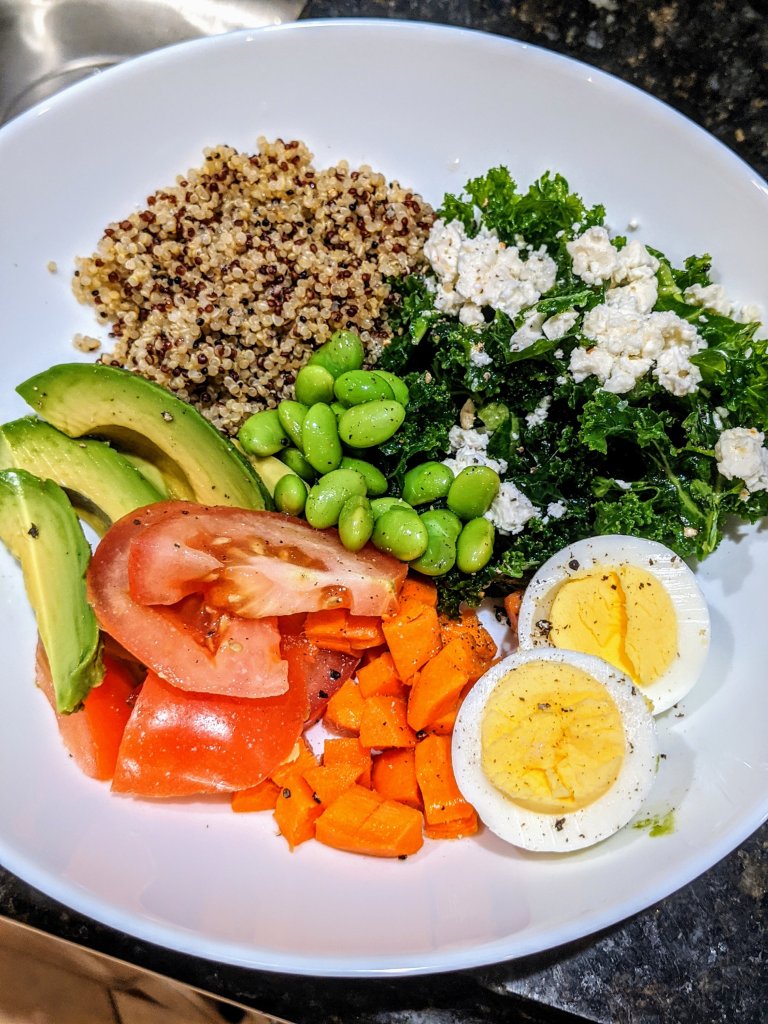
Taking all that into consideration, we have cooked at home a lot lately, and today, sharing this salad, as it is one of my absolute favorites. You can make it with any combination or raw veggies, really, but the key if using kale, is to massage the kale with olive oil to soften it, and then squeeze some lemon over the entire salad. Sprinkle some salt and pepper on it, and voila! You have a healthy, nutrient packed salad!

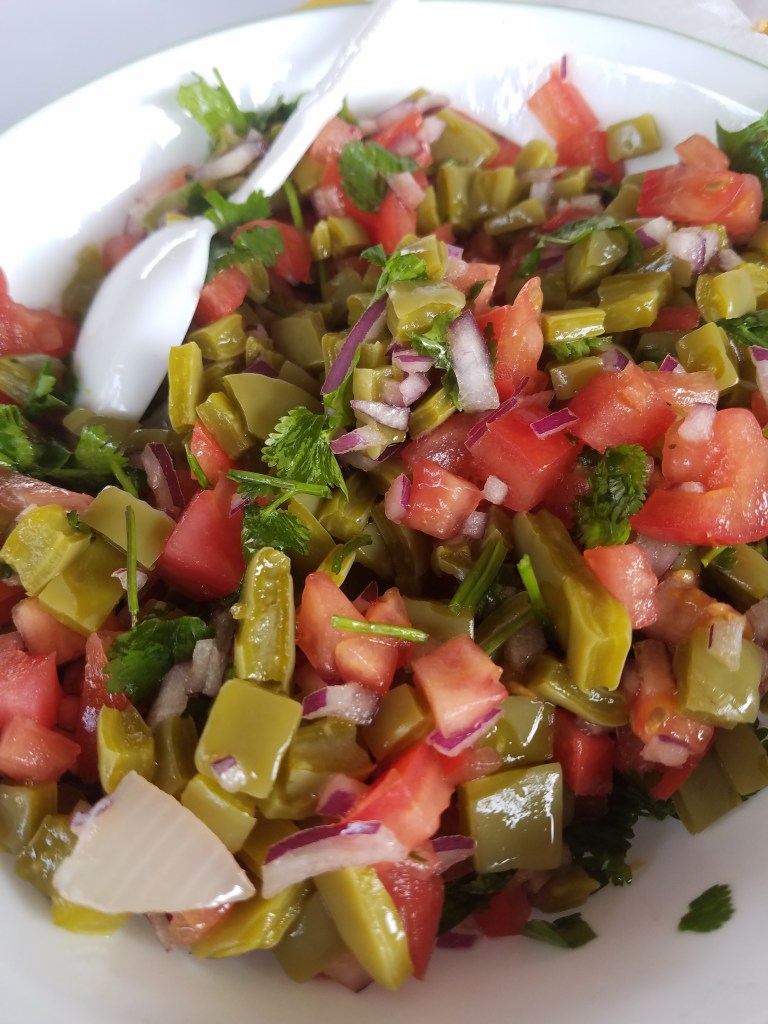
Here’s another salad I love, and one that my mom has made for years. Use as a garnish, or eat alone. Made out of cactus and what is best known as ‘pico de gallo’!

I’ve also engaged the kids in cooking a lot lately. In fact, I have found that if the kids are involved, they take sooooo much pride in their cooking, that that they are more likely to eat it, especially if it’s something new like kale.

Anyway! So, after all that you want to know how to prevent getting sick with COVID-19?

  1. Wash your hands
  2. Watch your distance (stay 6 feet away from others)
  3. Wear your mask
  4. Avoid Crowded spaces
  5. Avoid Close Contact with others
  6. Avoid Closed spaces (indoors is worse than outdoors)

Six easy things, and they don’t cost you any money! Except of course unless you don’t already have a mask. Here are some you can buy if you still don’t have any at home. Oh yeah, and eat those healthy meals as much as possible. I won’t be mad at ya if you throw some fries on the side though, because honestly, that’s how I roll. It’s called balance. 😀