‘Science Says’ Sunday – COVID-19

wp-15831186358013063870019948336585.jpg

This is me, giving an interview – non COVID-19 related though… 🙂

I know this post is coming late tonight, but hopefully you will read it first thing Monday morning, and hopefully it will help answer some of the questions you might have about COVID-19, formerly known as “2019-N Cov Virus”. A few weeks ago, I wrote a post all what we knew then (if you haven’t read it, brush up here), but we have learned a lot about it since I wrote that post. Buckle up, there are a number of things to keep in mind below.

1) The Media and Scientists

First, let me be clear. There are two wars we are fighting in this moment: 1) the fight to stop the spread of COVID-19 and 2) the fight to combat misinformation. Many scientists are actively working to gather as much evidence-based information as possible and subsequently share it with the public as quickly and accurately as possible. This is happening in the form of press conferences, social media posts, newspaper articles, etc. If you happen to read or hear something about COVID-19, be assured that it is coming from a reliable source. Information from the Centers for Disease Control, the World Health Organization, the National Institutes of Health (yes, especially Dr. Anthony Fauci), heads of local health departments – all reliable sources that you can count on to have reliable, not overly exaggerated or inaccurate information. My colleague Dr. Ellie Murray curated a list of trusted scientists who are sharing information on Twitter. She shared it with me here if you’re interested. Lots of other trusted sources you can follow on that thread. Yes, this – like many other situations – has become highly politicized and there are media outlets and businesses that will benefit from headlines and tag-lines that cause fear. Let me ask you this: When is panicking ever a good idea? NEVER. Probably not unless a lion is chasing you through the savanna and honestly, how many times is that going to happen in your life, really? So, take a pause, think critically, and double check the information you hear or read about by going to one of the sources I named previously. If you ever have additional questions that can’t be answered there, please feel free to email me or send me a DM on Instagram.

2) Don’t Panic

While we’re on the topic of panicking though, it would be insensitive of me to tell you not to panic when you have clearly heard that there have been deaths associated with COVID-19, including one to date in the US. Especially if you have loved ones who fall in these age categories or may simply more likely to get pretty sick with any viral infection. The data suggests that deaths have occurred as a result of infection with COVID-19, affecting some age groups more than other. According to reports:

  • 14.8% of deaths among people known to have COVID-19 aged >80 years of age
  • 8% of deaths among people known to have COVID-19 aged 70-79 years
  • 3.6% of deaths among people known to have COVID-19 aged 60-69 years of age
  • 2.3% of deaths among people known to have COVID-19 aged 10-59 years of age

As you can see, the biggest risk seems to be for people in the older age groups. As mentioned in my original post and my flu post, people with weakened immune systems, COPD, and other conditions that may them get pneumonia more easily, are likely to get pretty sick if infected with COVID-19 too. It’s important to note that these are percentages based on known cases. We don’t really know how many people are infected overall, so these percentages are just estimates. The number of total cases and deaths do still remain lower than the total number of cases and deaths due to flu. That said, still important to treat this epidemic with seriousness and try to…

3) Prevent the spread

Okay, so if I’m telling you not to panic, then why shouldn’t we panic and what should we do instead? Well, for starters, you should do what you should be doing even in the absence of COVID-19:

  • WASH YO HANDS!
  • COVER YO MOUTH WHEN YOU COUGH
  • STAY HOME WHEN YOU’RE SICK – I recognize this is hard for those who do not have flexible jobs, so as best as you can, please try not to be around other people when you are feverish and sickly.

Sorry, was that too shouty?? Yikes. #sorrynotsorry Seriously, friends. These tried and true measures will do a lot to help prevent the spread of COVID-19, BUT ALSO, the flu, the common cold, strep throat, pink eye, I mean…the list is kinda endless!

Practicing good respiratory hygiene is so important. Also important to keep in mind is to try and avoid touching your eyes, nose, or mouth as much as possible. That’s so that if you happened to not wash your hands well enough (more on that below), you will lower the chances of transferring any virus on your hand into the parts of your face where the virus can enter your body. It’s obvi more complicated than that, but you get the message – I hope!

4) Prepare

Okay, fine. So, what if I do all those things but I hear that the numbers of cases are still increasing?? Well, chances are that you will likely see the number of cases increase FO SHO. Why? Because it’s part of the natural process of identifying new people with the infection, especially when we don’t yet have a good way to screen for COVID-19 like we do with the flu or strep throat for example. So, if there happen to be more cases – and there will – and if there happen to be school or workplace closures (and there might), keep a few things in mind, just as you would for your regular preparedness plan – because you have one, RIGHT??!

  1. Do NOT buy a mask. If you are healthy, you do not need a mask. Most masks require fit-testing in order to be truly effective. No need to spend your money on that. Buy some mascara or extra deodorant. I promise.
  2. If you simply MUST buy something, buy what you would for the flu or cold: decongestants, anti-inflammatory drugs and acetaminophen for fevers.
  3. Have non-perishables on hand like canned goods, water, toilet paper, etc in case there are any closures and/or if you happen to be sick and cannot get to the store. This is always good to keep on hand though, so a good plan regardless.
  4. In general, it’s good to have a preparedness plan that can apply to any situtation. You can find a good one provided by the CDC here: https://www.cdc.gov/ncbddd/hemophilia/documents/familyemergencykitchecklist.pdf

5) Be a good citizen

This is a lot of information, and honestly, there are a lot of details about COVID-19 that I didn’t include here. But honestly, based on what we know currently, this is as much as I thought was worth sharing. The situation is changing very rapidly and we still don’t fully understand what things will look like here in the US. We still don’t have a gold standard for screening for COVID-19 nor do we have a tried and tested treatment, though there are treatment recommendations should you test positive and need to be treated.

What I do want to emphasize is that in order to prevent further spread in the US and to come out of all of this in the best way possible, it’s so very important that we all be good citizens. What does that mean? Do all the things I mentioned above to the best of your ability, and don’t let fear get the best of you. There are so many reports out there of prejudice and discrimination against certain groups and populations since news of COVID-19 began to circulate. If you want to blame someone, blame the virus. Don’t blame your neighbors. Deal?

Information for this post came from:

https://www.theatlantic.com/health/archive/2020/02/covid-vaccine/607000/

https://www.popsci.com/story/health/how-diseases-spread/

https://jamanetwork.com/journals/jama/fullarticle/2760782#.Xlqw4Q2V-iY.twitter (especially good read for clinicians)

https://www.sketchplanations.com/post/611288424379449344/how-to-wash-your-hands-in-these-times-and-to-be (with wonderful infographics like the one below)
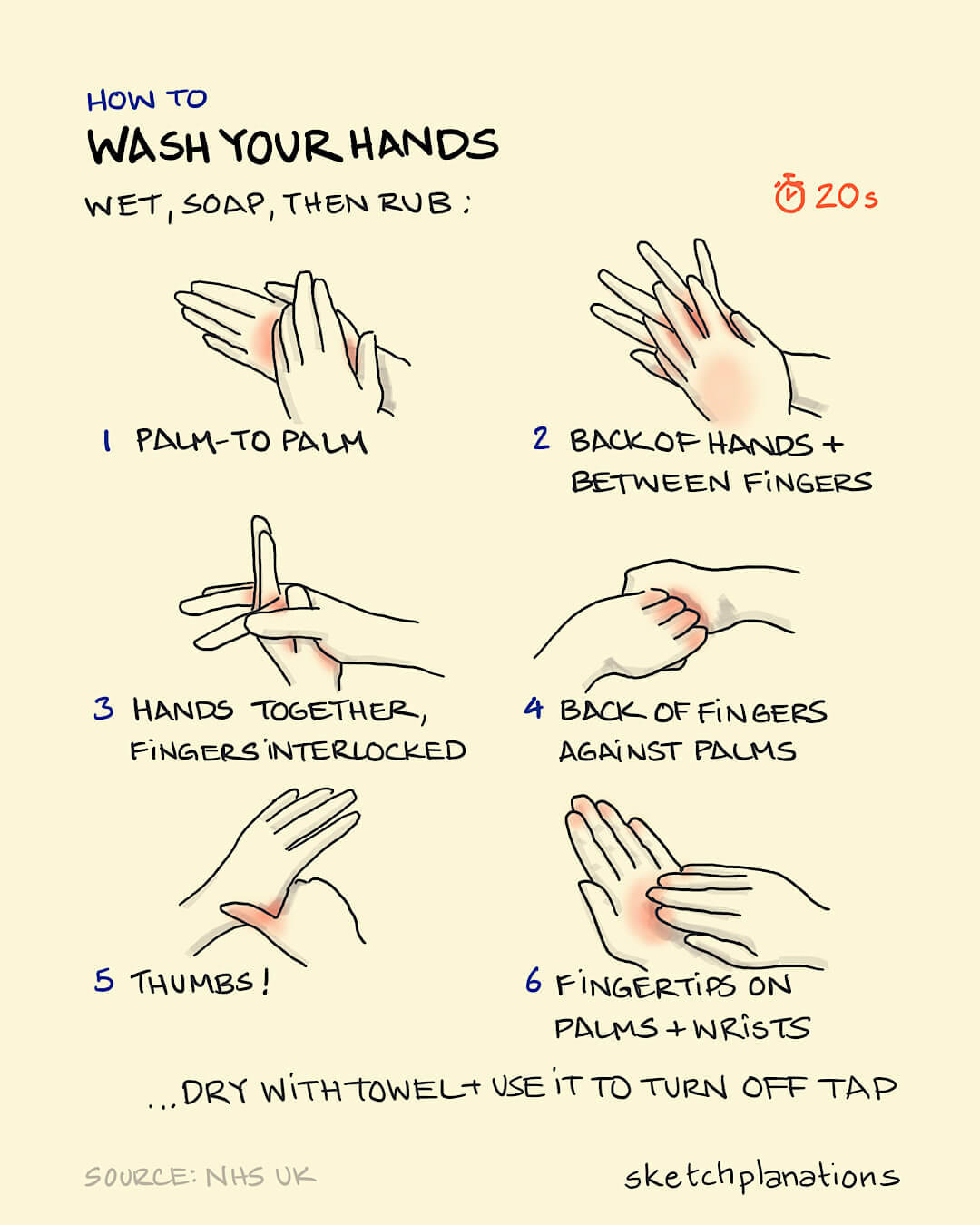
How to wash your hands In these times, and to be honest most times, washing your hands well is one of the very best things you can do to keep yourself healthy and free from infections.You should use soap if you have it, it should take about 20s, and...

The Centers for Disease Control

World Health Organization

National Institutes of Health

‘Science Says’ Sunday – Bacterial vs Viral

Screenshot 2020-02-23 18.57.00

My youngest has been sick with one thing or another since December. First it was a stomach bug (December), then it was the flu (January), and just this past week…strep throat (February)! Poor guy can’t catch a break. This series of illnesses inspired today’s post. You see, back in January, we took him to the doctor because he wasn’t feeling well. We learned that he had the flu and so they sent us home with a tons of medicine. Among the things they sent us home with, was Tamiflu.

What is Tamiflu? And why didn’t we get antibiotics to treat his flu?? Well, the flu is caused by a virus. Flu is short for influenza, and influenza is the virus that causes us to become sick. A virus is a super small organism that enters the body, and shacks up in our cells, and makes more copies of itself to cause disease. It basically tricks our cells into making more virus! Sneaky little things! Interestingly, viruses NEED our bodies to survive. They need a living host to live and cannot live outside a living host. Viruses, like the flu virus, CANNOT be killed with antibiotics. Anti (against) biotics (living things) are used to kill bacteria, most often, used to kill bacteria that is causing disease in our bodies. Tamiflu is an ‘anti (against) viral (virus)’ medicine, and helps stops the flu from taking over in our bodies. It makes it stop making more flu virus, if that makes sense. 🙂

Not a month later, he was sick with ‘strep throat’, which IS a bacterial infection, and does require antibiotics. There are two tests he got both in January and February: one was a flu test, where they test to see if a person is positive for the influenza virus; and the second, a strep test where they swab a persons throat to see if they are positive for Streptococcus bacteria. In January, he tested positive for flu and negative for strep, so he received the anti-viral medicine, Tamiflu. In February, he did not test positive for flu, but did test positive for strep, so he got an antibiotic! I hear people say that they need antibiotics when sick with things like the flu, colds, sometimes even stomach viruses, which as you’ve now learned, are caused by viruses and CANNOT be treated with antibiotics. Antibiotics would not help to make you better if what is causing you to be sick is a virus.

Well, what if you want antibiotics anyway? Too often I hear people say, “Man, I wish my doc would have just given me a shot in the butt”, usually referring to either antibiotics or steroids (steroids are a topic for another day). WELL…taking antibiotics when you don’t really need them is, hmm, not TERRIBLE immediately, per se, but pretty bad long term; it can lead to antibiotic resistance! According to the Centers for Disease Control:

“1. Antibiotic resistance does not mean the body is becoming resistant to antibiotics; it is that bacteria have become resistant to the antibiotics designed to kill them.

2. When bacteria become resistant, antibiotics cannot fight them, and the bacteria multiply.

3. Some resistant bacteria can be harder to treat and can spread to other people.

4. Antibiotics do not work on viruses, such as colds and flu, or runny noses, even if the mucus is thick, yellow or green. Antibiotics also won’t help some common bacterial infections including most cases of bronchitis, many sinus infections, and some ear infections.”

Remember that antibiotics do save lives. They are very important when you have an infection that is caused by bacteria. They are not necessary when you have an infection caused by a virus. Although we may be tempted to ask for antibiotics for things like the flu, a cold, or a sore throat, know that most often, these are caused by viruses and antibiotics are not what you need to tackle those crummy invaders!

For more information, visit:

https://www.cdc.gov/antibiotic-use/

https://www.cdc.gov/antibiotic-use/community/materials-references/index.html

https://www.cdc.gov/flu/index.htm

https://www.niaid.nih.gov/research/antimicrobial-resistance-causes


‘Science Says’ Sunday – Type 2 Diabetes

wp-15819059194468724035504692813866.jpg

Diabetes (or also known as “high blood sugar” disease)

Did you know that one of the diseases I study is type 2 diabetes? Type 2 diabetes falls within the general diabetes category, however, is not the only type of diabetes that humans get. Other types of diabetes include:

  • Type 1 diabetes (this is an autoimmune disease – a condition where your immune system mistakenly attacks your body),
  • Gestational diabetes (diabetes you get during pregnancy, which could sometimes also be type 2 diabetes during pregnancy),
  • Monogenic diabetes, or diabetes that is caused by a single gene defect or mutation (type 1 and type 2 are polygenic (poly=many, genic=genetic or related to genes), which they are related to a change, or defect, in multiple genes). Neonatal diabetes mellitus (NDM) and maturity-onset diabetes of the young (MODY) are the two main forms of monogenic diabetes. NDM occurs in newborns and young infants. MODY is much more common than NDM and usually first occurs in adolescence or early adulthood.

Today we’re going to go over type 2 diabetes, because it’s the most common type of diabetes, but we’ll cover other types of diabetes in later Science Sunday posts. We’re still in the middle of Heart Health Month, and I’m not sure if you are aware, but type 2 diabetes is a risk factor for heart disease. In fact, among people with diabetes, the most common causes of death are heart disease and stroke.
There are other conditions that can result from having diabetes, though. They include:

  • kidney disease
  • eye problems
  • dental disease
  • nerve damage
  • foot problems
  • heart disease
  • stroke

Perhaps you’ve read all of this and thought to yourself, okay, that’s great, but I still don’t really understand what diabetes is! Well, the National Institute of Diabetes and Digestive and Kidney Disease has a great way to describe it, so I’m going to summarize their explanation here! Diabetes is a disease that happens when your blood sugar is too high. The sugar in your blood is your main source of energy and comes from the food you eat. Insulin, a hormone made by an organ in your body called the pancreas, helps the sugar from food get into your cells so that it can be used for energy. Sometimes your body doesn’t make enough—or any—insulin or doesn’t use insulin well. When that happens, the sugar stays in your blood and doesn’t reach your cells. Over time, that large amount of sugar can cause health problems, among them, type 2 diabetes.

Phew! That was a lot! So, how do we prevent diabetes?? Is diabetes genetic? More importantly, if I get diabetes, can I reverse it and no longer have diabetes??

Yikes, that’s a lot too! Let’s start with whether diabetes is genetic. I mentioned that type 2 diabetes is a polygenic disease. While the concept of genetics is complicated, the short version of this is that while you may “carry” some genes that increase your risk for type 2 diabetes, having those genes alone does not alone mean that you will get diabetes. Type 2 diabetes also depends on other things. Here are some things that may increase your risk for type 2 diabetes (this means that each on its own cannot cause diabetes, but can increase your risk overall for type 2 diabetes):

  • are overweight or obese
  • are age 45 or older
  • have a family history of diabetes
  • are African American, Alaska Native, American Indian, Asian American, Hispanic/Latino (our research suggests being of Mexican background may increase your risk for type 2 diabetes by about 30%!) , Native Hawaiian, or Pacific Islander
  • have high blood pressure
  • have a low level of HDL (“good”) cholesterol, or a high level of triglycerides
  • have a history of gestational diabetes or gave birth to a baby weighing 9 pounds or more
  • are not physically active
  • have a history of heart disease or stroke
  • have depression
  • have polycystic ovary syndrome, also called PCOS
  • have acanthosis nigricans—dark, thick, and velvety skin around your neck or armpits

Remember, none of the factors above can cause diabetes on their own. Type 2 diabetes is also known as a “complex” disease, which means that sometimes, multiple things have to happen (the perfect storm of risk factors) in order for a person to develop type 2 diabetes.

So what can you do to prevent it?
To help prevent diabetes, the best things you can do are maintain a healthy weight, eat a healthy diet, and be more physically active! Definitely talk to your primary care doctor about managing the other things on the list above if any require medical treatment. Managing these things can help prevent type 2 diabetes. Also talk to your primary care doctor about any medications that may increase your risk for type 2 diabetes as well.

Finally, if you have diabetes, can you reverse it or cure it??
That’s a loaded question and the answer will vary depending on who you ask. It’s important to know that there is no cure for type 2 diabetes. Recent scientific studies suggest that it’s possible to “reverse it”. That’s a bold claim considering, but what can happen is that through diet changes and weight loss, you may be able to reach and hold blood sugar at normal levels, without medication. This, however, may not mean you’re completely cured. It’s very important to recognize and know that type 2 diabetes is an ongoing disease.
For additional information, check out the info pages for the National Institutes of Health, National Institute of Diabetes and Digestive and Kidney Diseases, American Diabetes Association, the Centers for Disease Control, and the National Heart Lung and Blood Institute.

Sources for today’s post:
https://www.niddk.nih.gov/health-information/diabetes/overview/what-is-diabetes
https://www.cdc.gov/diabetes/pdfs/data/statistics/national-diabetes-statistics-report.pdf
https://www.nature.com/articles/s41598-018-35707-7
https://www.ncbi.nlm.nih.gov/pubmed/31857443
https://www.nhlbi.nih.gov/health/educational/healthdisp/pdf/tipsheets/What-Is-Diabetes.pdf